
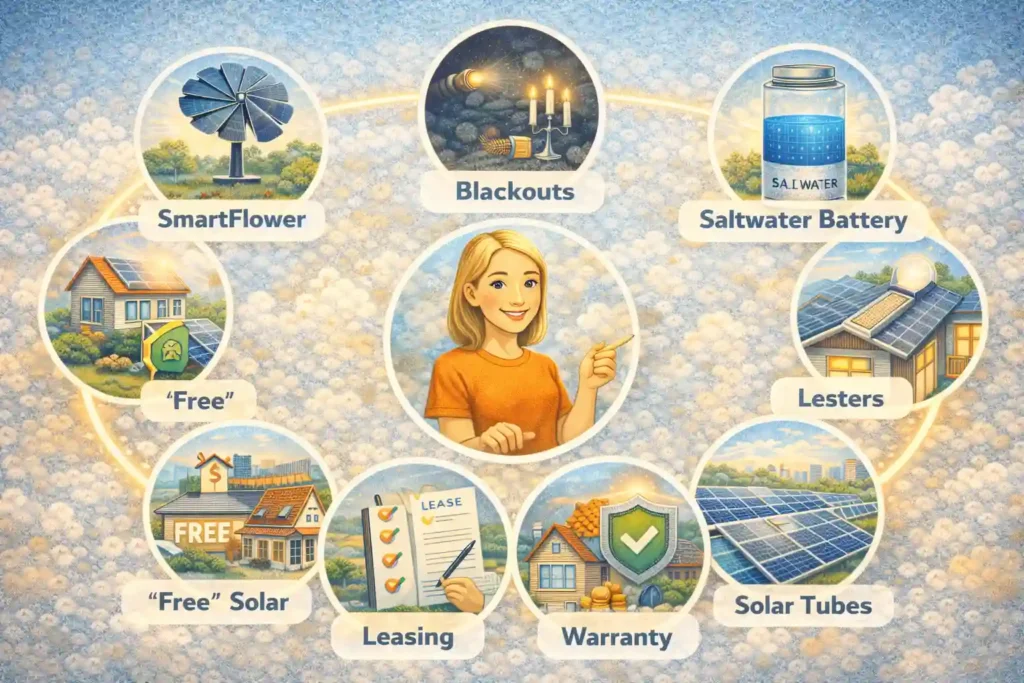
A1 SolarStore’s educational articles SmartFlower Solar: Innovative, Sculptural Solar Energy Solution, Global Blackout 2025: Do Solar Panels Work in a Blackout?, Saltwater Batteries: Do They Worth Their Salt, Solar Arrays: Powered by Sunshine, Free Solar Panels: Are They Really Free, Cancelling a Solar Lease Contract: Finding Ways Out, Solar Panel Warranties: Don’t Get Burned, Community Solar: Shared Sunshine, Solar Leasing: Rent the Sun and Solar Tubes: From Dungeon to Daylight help readers understand their options from scratch and which questions to ask before installing a solar system. Instead of overwhelming jargon, the articles explain basics in plain language: what exactly you’re buying, how it works in your home and what limitations each setup has.
The product‑focused materials emphasize understandable explanations of “what this means for me.”
SmartFlower Solar: Innovative, Sculptural Solar Energy Solution presents SmartFlower as a solar “sculpture” that tracks the sun but also clarifies that this option usually costs more than traditional rooftop panels and covers only part of household consumption. In Saltwater Batteries: Do They Worth Their Salt, saltwater batteries are described as a safer and more environmentally friendly but bulkier solution compared to lithium‑ion, so readers understand this isn’t “better in every way” but rather a different trade‑off.
Basic system components and alternative solutions are explained through examples.
Solar Arrays: Powered by Sunshine breaks down what a solar array is, how the number of modules and mounting method affect output, and whether your roof is suitable for a project.
Solar Tubes: From Dungeon to Daylight introduces solar tubes as a way to bring daylight into dark rooms without electricity, focusing on typical application areas like hallways, bathrooms and closets.
Financial and contractual topics are presented as “what you’re signing and what it leads to.” In Free Solar Panels: Are They Really Free, readers get a step‑by‑step explanation of why “free” panels actually mean long‑term payments and no ownership rights, not a gift.
Solar Leasing: Rent the Sun uses simple comparisons to show the difference between leasing and buying: who owns the equipment, who gets tax credits and how this affects monthly expenses. If a contract is already signed, Cancelling a Solar Lease Contract: Finding Ways Out describes available exit options, from cooling‑off periods when you can still cancel to buyouts and transfers to a new property owner.
Separate materials help set realistic expectations.
Solar Panel Warranties: Don’t Get Burned breaks down step by step how product warranties, performance warranties and installer workmanship differ, and why it’s important to keep documents and verify who will actually handle repairs. The article Global Blackout 2025: Do Solar Panels Work in a Blackout? addresses a common misconception: standard grid‑tied panels shut down automatically during blackouts, and real backup power requires specific configurations with batteries and compatible inverters.
Finally, Community Solar: Shared Sunshine shows that participating in solar generation is possible even without your own roof, through a share or subscription in a community project. Combined with materials on leasing, “free” panels and warranties, this gives beginners a simple but comprehensive picture: you don’t have to buy a system immediately, you can choose between purchasing, leasing, participating in community solar or staying on the grid, understanding the pros and cons of each option.